Data Centers in a Nutshell
Understanding the economic opportunities, resource demands, and potential community impacts of hyperscale and artificial intelligence facilities
Data centers have become a growing topic of discussion in communities across the country, including our own. Supporters point to substantial private investment, construction jobs, and potential tax revenue. Critics raise concerns about electricity demand, water consumption, environmental effects, and whether the long-term benefits justify the public resources involved.
But what exactly is a data center, and what would having one in our community actually mean?
To help answer those questions, Beacon Spotlight takes a closer look at the different types of data centers, with particular attention to the two attracting the most public discussion: hyperscale cloud data centers and artificial intelligence (AI) data centers.
What Is a Data Center?
At its simplest, a data center is a building or group of buildings filled with computers that store, process, and transmit digital information.
Every time someone checks email, uses online banking, watches a streaming movie, or accesses information stored in the cloud, a data center is likely involved somewhere in the process.
Data centers have existed for decades, but they have changed considerably in size, purpose, and resource requirements.
Traditional data centers were often operated by individual businesses, hospitals, banks, universities, or government agencies to manage their own information. Many were relatively modest facilities occupying a few thousand to tens of thousands of square feet. Other facilities, known as colocation centers, rent space and infrastructure to multiple businesses that install their own computer equipment. Managed hosting providers offer a similar service but also supply and maintain the computing equipment. Smaller edge data centers are located closer to the people and businesses using them, helping provide faster responses for applications such as telecommunications, gaming, and industrial automation.
These facilities continue to serve important purposes, but they are not necessarily the enormous industrial developments now making headlines. Those larger projects generally fall into two categories.
The Two Types of Data Centers Drawing the Most Attention
1. Hyperscale Cloud Data Centers
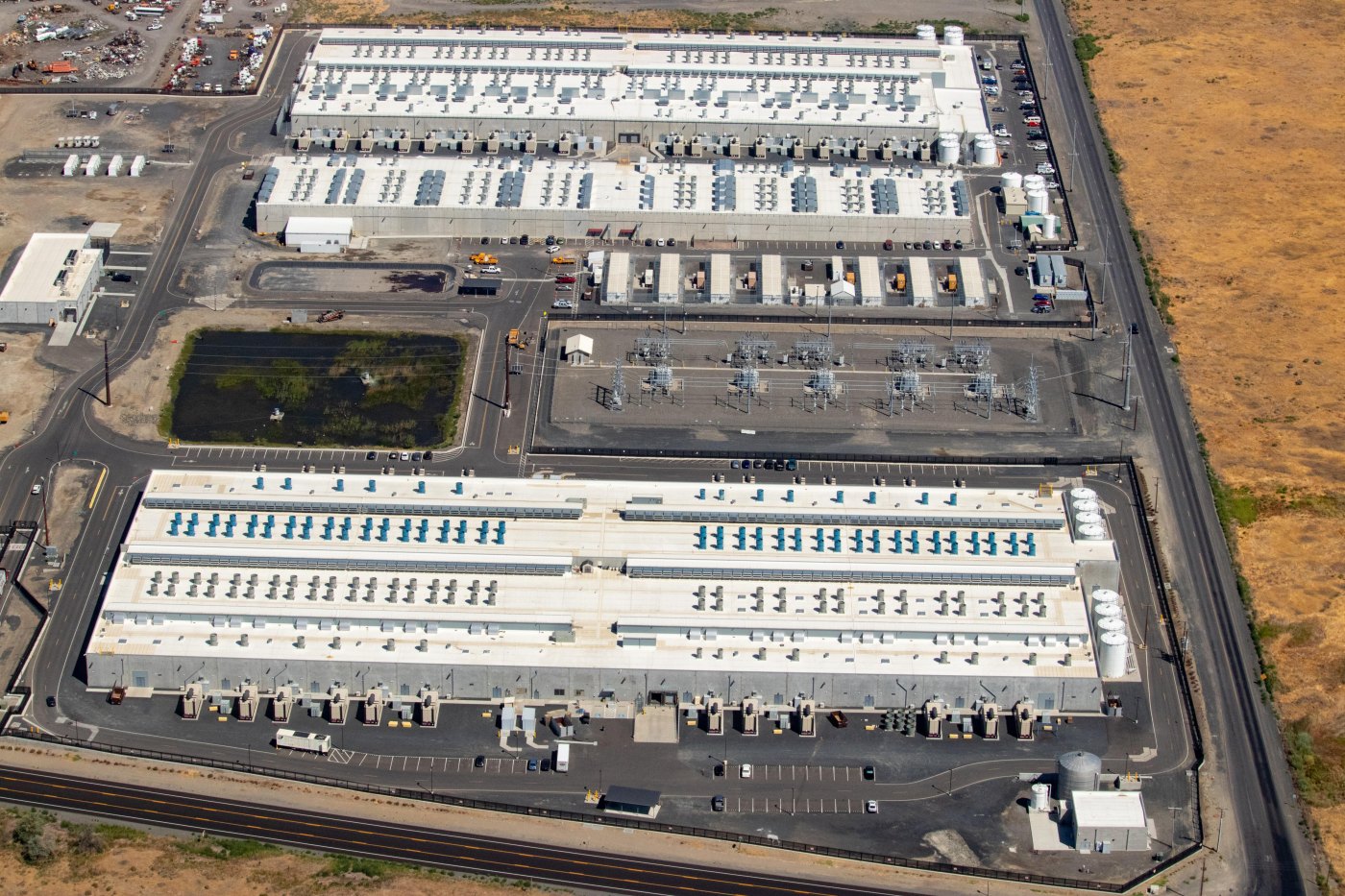
Hyperscale data centers are massive computing facilities operated by technology companies such as Amazon, Microsoft, Google, and Meta. They support cloud computing, online services, digital storage, and the enormous amount of information exchanged across the internet. Unlike traditional data centers, hyperscale facilities are designed to accommodate hundreds of thousands of servers, often spread across multiple buildings. A large campus may occupy hundreds of acres and require its own electrical substations, cooling infrastructure, backup generators, and extensive fiber-optic connections. These facilities are built to operate continuously, often with the ability to expand as demand increases.
2. Artificial Intelligence (AI) Data Centers
AI data centers are closely related to hyperscale facilities, but they are designed specifically to handle the intensive computing demands of artificial intelligence. Rather than relying primarily on conventional computer processors, AI facilities use large numbers of specialized chips, including graphics processing units (GPUs), to train and operate AI systems. These processors can consume significantly more electricity and generate considerably more heat than conventional computing equipment. As a result, the largest AI projects may require far greater electrical capacity, specialized cooling systems, and additional infrastructure. Some planned AI campuses are so large that their electricity requirements are comparable to those of entire cities. It is important to understand that these two categories overlap. A hyperscale campus may also contain substantial AI computing equipment, and its resource requirements can change as that equipment is added or replaced.
How Much Land Do They Need?
The amount of land required depends on the size of the project, its electrical infrastructure, cooling system, and plans for future expansion.
Large hyperscale campuses may occupy approximately 50 to 500 acres, although smaller and larger projects exist Some of the largest proposed AI campuses cover 500 to more than 2,000 acres. For perspective, a 2,000-acre development occupies more than three square miles. The buildings themselves account for only part of the property. Additional land may be needed for electrical substations, transmission equipment, cooling systems, backup generators, roads, security setbacks, and future construction. A data center campus can therefore resemble an industrial park more than a traditional office complex. For communities considering a project, the important question is not simply how large the first building will be, but how much land and infrastructure the completed development may eventually require.
Electricity: Often the Biggest Challenge
Electricity is among the most important considerations when evaluating a large data center proposal. A substantial hyperscale campus may require approximately 100 to 500 megawatts of electrical capacity when fully developed. The largest proposed AI campuses may require several hundred megawatts to multiple gigawatts. To put that into perspective, one gigawatt is 1,000 megawatts. If consumed continuously, that represents 8.76 billion kilowatt-hours of electricity annually—roughly comparable to the annual electricity consumption of several hundred thousand average American homes.
Not every proposed campus will operate at its maximum capacity, and some developments are planned in stages over many years. Nevertheless, these electrical demands can require major infrastructure improvements. Utilities may need to construct new substations, transmission lines, or generating facilities. Some developers are pursuing dedicated natural-gas generation, nuclear power agreements, renewable energy contracts, and large battery installations. Most large data centers also maintain backup power systems to protect against outages.
Who Pays for the Electrical Improvements?
This is one of the most important questions for local residents. When a utility expands its infrastructure to serve a large industrial customer, the costs may be paid directly by that customer, incorporated into negotiated utility agreements, or distributed among other customers through electricity rates. The answer depends on state regulations, utility policies, and the specific agreement. Communities should understand how much electricity a project is expected to use, who will finance the necessary improvements, and what protections exist for other ratepayers.
Water: A Question of Cooling Technology
Data centers generate substantial heat, and that heat must be removed to keep computer equipment functioning safely. Water consumption varies dramatically depending on how the facility is designed. Some facilities use evaporative cooling, which can consume significant quantities of water, particularly during hot weather. A very large campus using this approach may require millions of gallons per day under certain operating conditions. Other facilities use air cooling or closed-loop liquid cooling systems that recirculate coolant. These approaches can reduce direct water consumption, although they may involve different electricity demands and still require some water for other operations.
A 2024 report from Lawrence Berkeley National Laboratory estimated that U.S. data centers directly consumed approximately 17 billion gallons of water in 2023. The report also estimated substantially greater indirect water consumption associated with electricity generation. Although data centers account for a relatively small portion of total national water use, their impact can be significant in communities with limited local supplies.
For a proposed facility, residents should know where the water will come from, how much will be consumed during peak demand, whether the water will be recycled, and how local wells, aquifers, and other water users could be affected.
The Financial Investment
Large data centers represent enormous private investments. A hyperscale campus can cost several billion dollars, depending on its size and equipment. The largest AI developments may involve investments reaching tens of billions of dollars, particularly when the cost of specialized computer chips is included. These projects also require substantial quantities of concrete, steel, copper, electrical transformers, cooling equipment, and fiber-optic infrastructure.
That spending can create opportunities for construction companies, equipment suppliers, transportation businesses, and other contractors. However, the headline investment figure does not necessarily represent money that will be spent within the host community. Much of the specialized equipment may be manufactured elsewhere, and major construction contracts may go to regional or national firms. The economic benefit to a community depends partly on how much of the work and spending remains local.
Jobs: Construction Versus Permanent Employment
Employment is one of the most frequently discussed benefits of large data center developments. During construction, a major campus may employ thousands of workers, particularly at peak activity. These projects can take several years to complete, and phased developments may continue construction for much longer. Electricians, heavy-equipment operators, concrete crews, engineers, and other skilled tradespeople may find substantial opportunities, but construction employment is temporary.
Once a data center becomes operational, the number of permanent employees is often much smaller. Many facilities operate with dozens to a few hundred employees responsible for equipment maintenance, electrical systems, cooling, security, and general operations. Some very large or multi-building campuses employ more. There is also an important distinction between jobs created and jobs filled by local residents. Specialized positions may initially be filled by experienced employees transferred from other facilities or H1-b Visa holders from other countries. Construction contractors may also bring skilled crews from outside the region when local workers are unavailable. Communities evaluating a proposal should distinguish between temporary construction positions, permanent operating jobs, and employment opportunities specifically expected to benefit local residents.
Tax Revenue: Potential Benefits and Trade-Offs
Tax revenue is another major consideration. A large data center can add substantial value to a community's property-tax base. Depending on state law and local agreements, this may generate revenue for schools, local government, and public services. Some communities have benefited considerably from these additions. However, the tax picture becomes more complicated when incentives are involved. Many states offer sales-tax exemptions on servers, computer equipment, and other purchases to attract data center investment. Because expensive computing equipment must be replaced periodically, these exemptions can continue providing financial benefits to the operator long after construction ends. In some states, the total cost of these incentives has grown much larger than originally projected. For local taxpayers, the most useful figures are the expected annual property-tax revenue, the value of any exemptions or abatements, and the additional public expenses associated with the development.
The key question is how much net financial benefit remains after the incentives and public costs are accounted for.
Environmental and Public Health Considerations
The environmental effects of data centers depend heavily on their size, location, energy sources, and cooling systems. Some concerns are well documented, while others are still being studied.
Air Pollution
Data centers can contribute to air pollution through the electricity they consume and through equipment operating on-site. When electricity is generated by fossil-fuel power plants, additional demand may contribute to emissions of pollutants such as nitrogen oxides and fine particulate matter. On-site diesel backup generators can also produce emissions during testing and operation. Some newer projects include natural-gas turbines for more extensive power generation.
Researchers from the University of California, Riverside, and the California Institute of Technology have modeled potential health effects associated with the growth of AI computing. One analysis projected that air pollution associated with AI data centers could contribute to as many as 1,300 premature deaths annually in the United States by 2030 under the study's assumptions, with substantial associated health costs. These are modeled projections, not documented deaths directly attributed to individual data centers. Such studies are useful for examining potential risks, but their conclusions depend on assumptions about future energy demand, power generation, emissions, and population exposure. The actual impact of a proposed facility will depend on its equipment, operating practices, pollution controls, and sources of electricity.
Water Availability
Beyond the total quantity of water consumed, the location of that consumption matters. A facility using substantial amounts of water in an area with abundant supplies may present different challenges than one drawing from an already stressed aquifer. Local conditions—including seasonal availability, groundwater recharge, drought, and competing agricultural or residential demand—are therefore important. Another challenge is transparency. Publicly available information about water consumption at individual data centers is often limited.
Noise
Noise is a growing concern in communities located near large data centers. Cooling fans, mechanical equipment, transformers, and generators may operate throughout the day and night. Even when sound levels comply with local regulations, a continuous mechanical hum can be disruptive, particularly in otherwise quiet rural areas. Low-frequency noise can be especially difficult to evaluate using measurements that do not adequately capture its characteristics. Research on environmental noise more generally has linked prolonged exposure to sleep disruption, stress, and certain cardiovascular risks.
A University of Michigan environmental health professor notes broader evidence that long-term noise exposure can contribute to high blood pressure and stroke risk.
Further, a 2020 review in "Frontiers in Neurology" examines auditory and vestibular symptoms associated with acoustic and electromagnetic energy outside conventional hearing ranges. The study discusses reports of dizziness, nausea, tinnitus, vertigo and other symptoms following exposure to some infrasound and ultrasound.
Harmonic Distortion
The data centers contain large numbers of switching power supplies, backup electrical systems, and variable speed motors that can produce harmonic distortion. This distortion can be measured by electrical engineers, because it can adversely affect motors, transformers, protective equipment, and other electrical systems. No studies we could locate documented what impact it may have on humans, animals, or plants. According to a Bloomberg investigation from December of 2024, approximately 770,000 household electricity sensors and the locations of nearly 1,500 data centers reported unusually high levels of electrical harmonic distortion through power lines for up to a fifty mile radius from data center location. The potential harm to electrical equipment such as appliances, and especially computer equipment is documented; what is highly suspected but not thoroughly proven yet due to lack of research is that these distortions are causing harm to human health.
Carbon Emissions
Data centers consume electricity continuously, and their contribution to greenhouse gas emissions depends substantially on how that electricity is generated. Facilities relying on electricity from fossil-fuel generation may increase emissions, particularly when new power plants are constructed to meet demand.
What Are the Potential Benefits to a Community?
Large data centers may provide meaningful economic opportunities. A well-planned development may expand the property-tax base, create substantial construction activity, generate demand for local businesses, and support improvements to electrical and telecommunications infrastructure. Permanent technical positions may offer competitive wages, and partnerships with colleges or vocational programs can help prepare local workers for those opportunities. In some cases, infrastructure built to support a data center may also benefit other businesses and residents. Data centers also provide services that households, hospitals, schools, businesses, and government agencies increasingly depend upon. These benefits can be considered alongside the costs. The challenge is determining whether the particular project being proposed offers enough lasting local value to justify its demands on land, utilities, and public resources.
Questions Communities Should Ask
Before a large data center project moves forward, residents and local officials can benefit from clear answers to several practical questions:
What kind of facility is being proposed? Is it primarily a conventional hyperscale cloud facility, an AI computing campus, or a combination?
What is the full planned development? How much land will ultimately be occupied, and what future expansion is anticipated?
How much electricity will it require? What is the projected demand at opening and at full build-out, and who will pay for new infrastructure?
How much water will it use? What cooling technology is planned, where will the water come from, and how might other users be affected?
What jobs will actually be available? How many are temporary construction positions, how many are permanent, and what local training or hiring commitments exist?
What are the financial arrangements? What tax revenue is expected, what incentives have been offered, and what additional costs might local governments or utility customers bear?
What protections will be in place? How will noise, air emissions, water consumption, and other environmental concerns be monitored and addressed?
What happens if plans change? Who is financially responsible if the project is delayed, substantially reduced, abandoned, or eventually closed?
The Bottom Line
For communities considering these developments, the most important distinction may not be whether data centers are inherently good or bad, but whether a particular project is appropriately designed, financially responsible, and compatible with local resources and priorities. Ultimately, an informed community is in the best position to evaluate both the opportunities and the obligations that come with hosting one.